
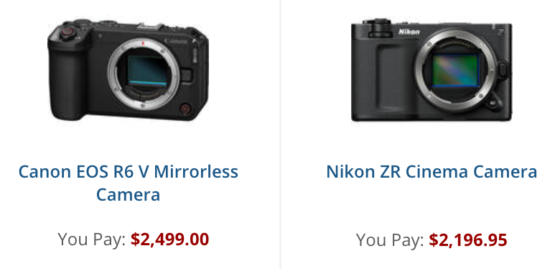
Comparing the new Canon EOS R6V ($2,499) with the Nikon ZR ($2,197):
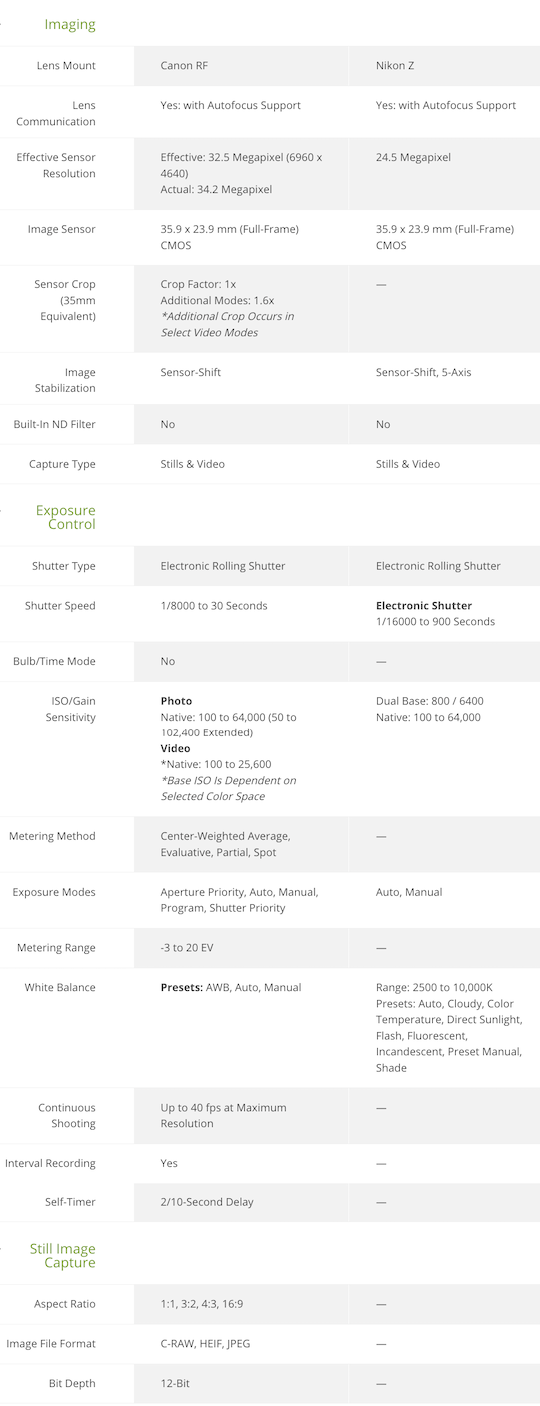
Canon EOS R6V vs. Nikon ZR specifications comparison
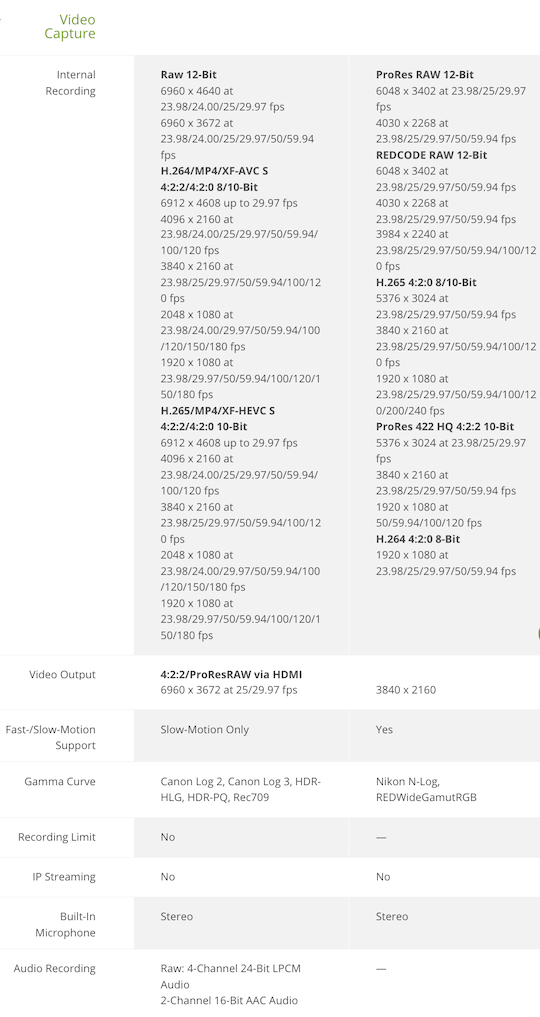
The Canon EOS R6V and Nikon ZR are both compact, full-frame, video-focused mirrorless cameras without an EVF. They prioritize internal RAW recording, strong IBIS, and run-and-gun usability in a small “cinema-style” body rather than traditional stills photography.
The Canon EOS R6V is a higher-resolution hybrid that builds on the R6 III sensor/platform with creator-friendly upgrades like active cooling and open-gate recording. The Nikon ZR is Nikon’s first Z Cinema camera, incorporating RED Digital Cinema technology for RAW recording, color science, and a more cinema-oriented design.
Key specs comparison:
- Sensor & Resolution Canon: 32.5 MP full-frame CMOS (≈6960 × 4640). Nikon: 24.5 MP full-frame partially stacked CMOS (same family as Z6 III). Advantage: Canon for stills, cropping, and higher-resolution open-gate video; Nikon for potentially better readout speed/low light with its stacked design.
- Processor Canon: DIGIC X. Nikon: EXPEED 7.
- Video Capabilities Canon: Up to 7K 60p RAW (Cinema RAW Lite), 7K 30p open-gate (3:2 full sensor height), oversampled 4K 60p, 4K 120p, high-bitrate options, Canon Log 2/3. Active cooling fan for sustained recording without overheating. Nikon: Up to 6K 60p (R3D/NE RAW codec), ProRes RAW options, 4K 120p, 15+ stops dynamic range in Log3G10, N-Log, HLG. Dual base ISO (800/6400). Advantage: Canon for higher resolution and open-gate flexibility (great for vertical/social content); Nikon for industry-standard RED RAW workflow and color science.
- Image Stabilization Both: 7.5 stops IBIS (Canon may reach 8.5 with compatible RF lenses via coordinated control). Tie: Excellent for both.
- Autofocus Canon: Dual Pixel CMOS AF II with excellent subject detection (people, animals, vehicles). Nikon: Advanced subject detection (people, animals, vehicles, planes) with auto mode. Slight edge: Canon Dual Pixel is often praised for reliability in hybrid shooting, but Nikon is very capable.
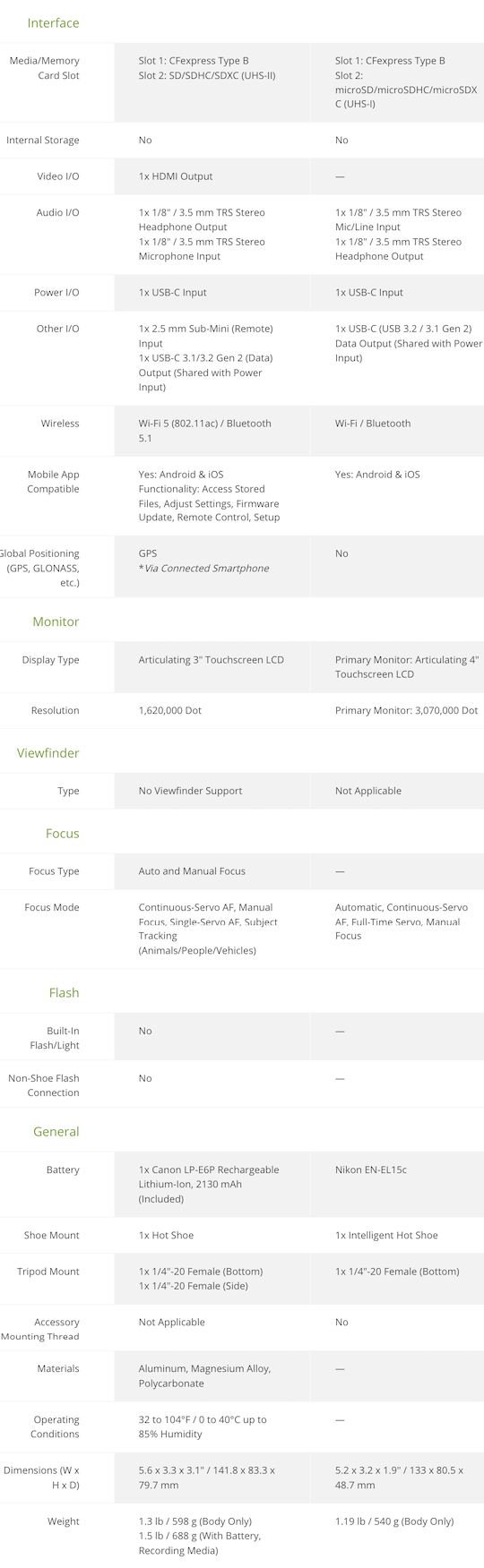
- Screen & Monitoring Canon: 3″ vari-angle touchscreen (≈1.62M dots). Nikon: Larger 4″ vari-angle DCI-P3 LCD (≈3.07M dots, 1000 nits brightness) – much better for bright outdoor use. Advantage: Nikon (significantly larger and brighter).
- Viewfinder: Neither has a built-in EVF (both are video-first designs with optional external EVF support via hot shoe).
- Audio Canon: Standard high-quality inputs. Nikon: Internal 32-bit float recording (a standout feature for clean audio without clipping worries). Advantage: Nikon.
- Storage Canon: CFexpress Type B + SD UHS-II (full-size slots). Nikon: CFexpress Type B + microSD. Advantage: Canon for easier media handling.
- Build & Ergonomics Both are compact and lightweight (Canon ≈688g with battery; Nikon ≈630g or lighter). Canon has a more traditional hybrid grip; Nikon has a blockier cinema-style body. Both have weather sealing and full-size HDMI on Canon (Nikon uses micro variants).
- Stills Performance Canon: Stronger – up to 40 fps electronic burst, better resolution for prints/cropping. Nikon: Capable but more video-prioritized (electronic shutter only).
- Battery & Power Canon: LP-E6P. Nikon: Standard Z battery. Real-world runtime depends heavily on cooling, codec, and frame rate.
Who Should Buy Which?
Choose the Canon EOS R6V if:
- You want higher resolution stills + video hybrid capabilities.
- Open-gate 7K recording and active cooling for long takes are priorities.
Choose the Nikon ZR if:
- You value RED RAW workflow, color science, and 32-bit float audio for professional post-production.
- A larger, brighter 4″ screen and compact cinema form factor matter more.
Overall: These are very close competitors aimed at similar users (creators who want full-frame RAW in a small body). The Canon edges out in resolution, cooling, and hybrid versatility; the Nikon stands out with its screen, audio innovation, and RED-backed RAW/color pipeline.
https://photorumors.com/2026/05/13/announced-canon-eos-r6-v-rf-20-50mm-f-4-l-is-usm-pz-lens-pre-orders-now-open/